
Vinyl wraps temporary renovation work
- Dora

- Jan 14
- 5 min read
Last updated: January 14, 2026 — Dora (Sales Manager)
Author note : Dora supports temporary renovation projects for rental turns, listing prep, and light commercial refreshes, focusing on practical surface prep, edge finishing, and removability planning.
Temporary renovation work is what you do when time, risk, or downtime matters more than “forever.” Think: a rental you can’t permanently alter, a retail space that must stay open, a home that needs to look “listing-ready” fast, or a hotel/office that needs a clean refresh between busy seasons.

In these situations, vinyl wrap (also called lamination decorative film, PVC lamination film, self-adhesive decorative film, or architectural decorative film) becomes a practical surface-upgrade tool: it changes the look of cabinets, doors, furniture, and panels without demolition, with a removal path that’s much easier to plan for than paint, stone, or replacement.
What does “temporary renovation work” mean for a vinyl wrap project?
Temporary doesn’t mean sloppy—it means controlled and reversible. A vinyl wrap temporary renovation is a surface-level makeover designed to (1) look good on camera and in person, (2) install quickly, and (3) be removable (or at least serviceable) when the space changes again.
Where lamination decorative film makes the biggest impact
Kitchen + vanity cabinets: doors, face frames, end panels
Interior doors: flat doors, shaker panels (best with proper edge work)
Furniture surfaces: dressers, tables, shelving, reception counters
Accent panels/walls: smooth walls, laminated boards, retail display panels
Backsplashes and low-splash zones: with realistic heat/steam expectations

Why choose vinyl wrap instead of paint, refacing, or replacement?
If your goal is “fast and low-risk,” vinyl wrap is often the most predictable workflow:
Less disruption: no sanding dust clouds, no curing smells for days, no “kitchen offline” for weeks.
More controllable outcome: color/texture is consistent roll-to-roll when you choose a stable lamination decorative film system (critical for patching and repeat projects).
Budget control: cabinet refacing is a strong option, but it’s still a bigger project category (materials + labor), often priced far above a surface wrap approach for short timelines. (Bob Vila)
A common “temporary” use case: listing prep + staging
For home staging, the timeline is non-negotiable: photo windows and listing schedules are fixed, and rework is expensive. That’s why stagers often prefer surface upgrades that are quick, camera-friendly, and low-risk.
When is a vinyl wrap NOT the right temporary renovation option?
Even a high-quality lamination decorative film can fail if the surface is unstable. Avoid vinyl wrap if you see:
peeling/flaking paint (wrap will pull it up during removal)
moisture-swollen MDF edges (edges crumble, lift easily)
heavy texture (texture prints through + weak edge bonding)
constant heat/steam blast zones (near kettles, cooktops, dishwasher vents)
silicone contamination or waxy cleaners (adhesion becomes unpredictable)
Safer alternatives: replace the panel, re-paint with proper curing time, or use removable panel overlays.
How do you plan a vinyl wrap job to avoid bubbles, edge lift, and residue?
Most “vinyl wrap horror stories” come from skipping planning steps—not from the material alone. Use this simple workflow:
Vinyl wrap planning checklist
Confirm the substrate: glossy thermofoil, raw MDF edges, oily laminate, textured walls—each behaves differently.
Do a test patch: same surface, same cleaning method, same dwell time (even 24 hours tells you a lot).
Prep correctly: degrease, rinse, fully dry. Avoid “miracle cleaners” that leave residue.
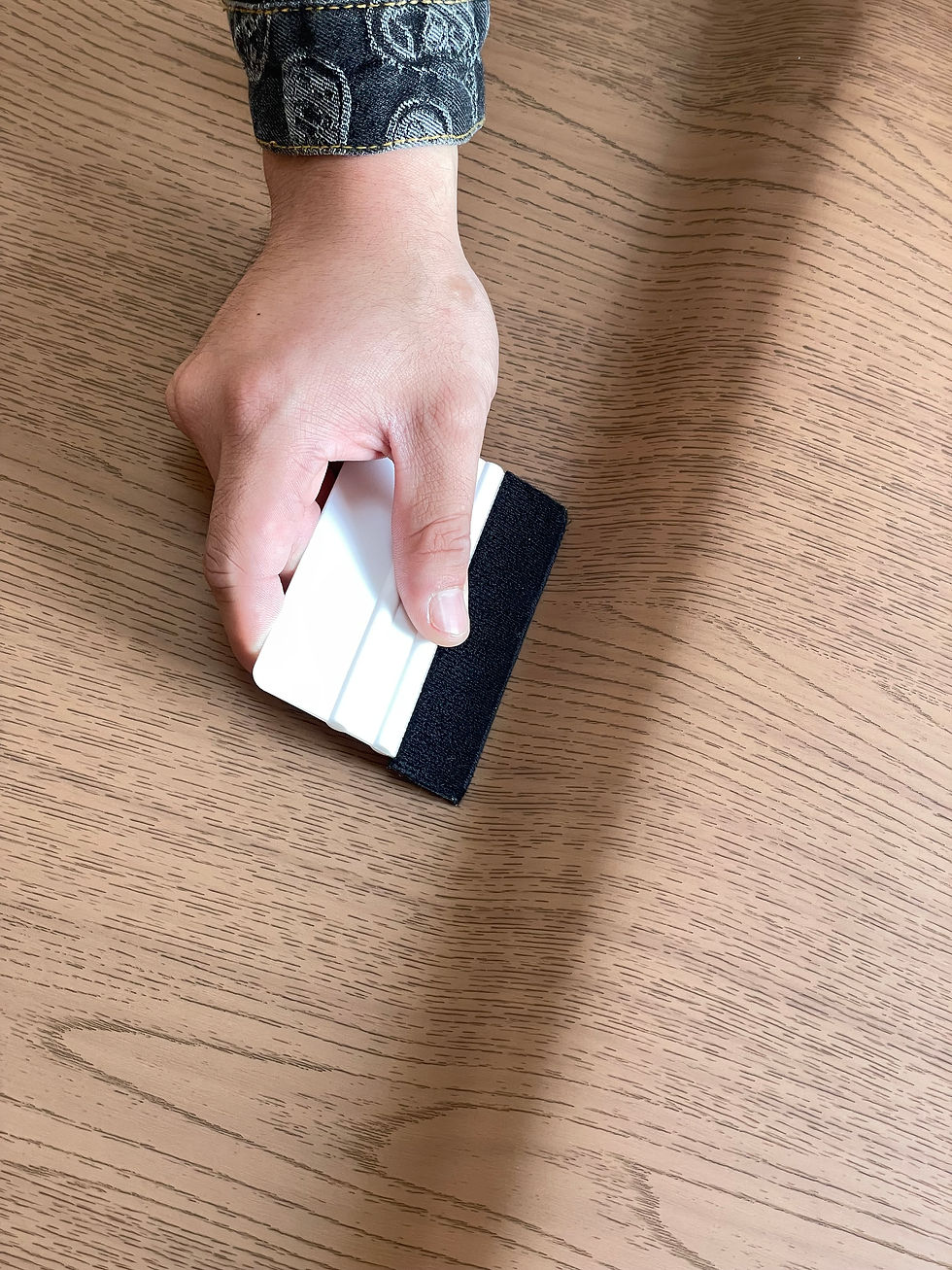
Install with edge strategy: corners, seams, and high-touch edges need the most attention.
Respect heat/steam zones: around dishwashers, kettles, cooktops—plan extra edge sealing or keep wraps out of the hottest areas.
Is vinyl wrap renter-friendly and safe for indoor air?
Two practical realities matter for temporary renovation work:
Permission + expectations: “Removable” doesn’t mean “remove anytime with zero effort.” Landlord rules, wall paint quality, and humidity all affect outcomes.
Indoor air quality: many indoor products (including finishes and cleaners) can emit VOCs, and indoor VOC levels can be higher than outdoors—so ventilation and material choices matter. (US EPA)
Indoor VOCs can also be measured using standardized methods (for example, ISO 16000-6 for VOC determination in indoor/test chamber air).
Authoritative reference link (informational only):US EPA — Volatile Organic Compounds’ Impact on Indoor Air Quality
How long will a vinyl wrap temporary renovation last, and how do you remove it cleanly?
Lifespan depends on surface type, traffic, cleaning habits, and exposure (heat/steam/sunlight). In real-world temporary renovation work, the goal is usually “looks great for the selling season / lease term / campaign period,” not “survive a decade of abuse.”
For removal:
Warm the film slightly (room warmth or gentle heat), peel slowly at a low angle, and keep tension consistent.
If any adhesive remains, use a surface-safe adhesive removal method matched to the substrate (always spot-test first). (RS Online)

For a complete, step-by-step removal walkthrough (tools, gentle heat, residue cleanup by substrate), read:How to Remove Decorative Film Cleanly (Step-by-Step Guide)
Adhesion performance is commonly evaluated with standardized peel testing methods (for example, ASTM D3330 for pressure-sensitive peel adhesion and ASTM D903 for peel/stripping strength under defined conditions).
What are the most common vinyl wrap temporary renovation questions?
Below are the questions we hear most often from renters, stagers, and light-commercial refresh projects
Q1: Will vinyl wrap damage my cabinets or doors?If the surface is stable and properly prepped, damage risk is usually tied to weak paint, moisture-swollen MDF edges, or aggressive removal, not the concept of wrapping itself.
Q2: Can I vinyl wrap over textured walls or orange-peel paint?You can, but texture often prints through and adhesion can be inconsistent. For temporary work, smooth substrates are the safest.
Q3: Is vinyl wrap waterproof for kitchens and bathrooms?It’s water-resistant, not magic. It performs best on non-immersed surfaces with good edge finishing and realistic steam/heat expectations.
Q4: What’s the easiest surface for beginners?Flat cabinet doors, smooth panels, and furniture tops (simple geometry, fewer inside corners).
Q5: How do I avoid edge lifting?Prioritize edge prep, corner technique, and avoid placing seams where hands constantly grab.
Q6: Can I remove it later without residue?Residue risk depends on the adhesive type, dwell time, and substrate. Plan removability with a test patch first.
Want a low-risk vinyl wrap test kit for temporary renovation work?
If your projects demand speed, repeatability, and a clean finish, we can help you spec the right lamination decorative film / PVC lamination film construction (finish, thickness, adhesive behavior, and texture) and provide a practical sampling plan—so your first job is predictable, not stressful.
Email: support@gevitt.com
Tel/WhatsApp: +86 15738309271


Comments