
Why vinyl film lasts longer than painted walls
- Project Desk

- Jan 20
- 4 min read
January 24, 2026 — Project Desk
When walls start to look tired, most people think of repainting first. But many homeowners, landlords, and commercial operators are now asking a different question: why does vinyl film often last longer than painted walls?
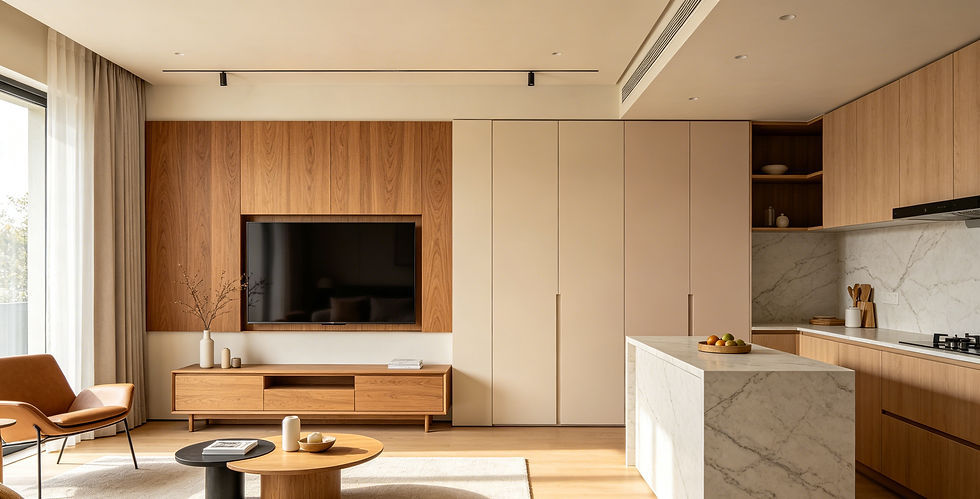
From apartments and kitchens to offices and retail spaces, vinyl wrap and lamination decorative film are increasingly chosen not just for looks—but for durability, maintenance, and lifecycle cost.
Summary: longevity is rarely about “stronger material,” but about how a surface handles daily wear, moisture, and cleaning.

Why does vinyl wrap resist wear better than paint?
Paint looks smooth at first, but it remains a coating—thin, porous, and vulnerable to abrasion. In contrast, vinyl wrap (PVC lamination film / architectural decorative film) is a manufactured surface layer designed to take physical contact.
How vinyl wrap handles daily wear
Multi-layer structure resists scuffs and scratches
Flexible surface absorbs minor impacts instead of cracking
Printed + laminated layers protect color from fading
Example: In hallways or behind dining chairs, painted walls often show marks within months. Vinyl wrap panels in the same areas typically maintain a consistent finish with only light cleaning.
Summary: Vinyl wrap lasts longer because it’s engineered as a surface—not just a coating.
The above are material selection tips. Consult us now to get a customized solution.
How does vinyl film perform better in moisture and cleaning environments?
Moisture is one of paint’s biggest enemies. Steam, humidity, and frequent wiping gradually break down paint films, leading to peeling or discoloration.
Why vinyl wrap survives moisture better than paint
Non-porous surface limits water absorption
Laminated top layers protect printed color
Designed for repeated cleaning without breakdown
This is why lamination decorative film is widely used in kitchens, bathrooms, rentals, and commercial interiors where walls are cleaned often. Educational guidance from the U.S. Environmental Protection Agency explains how moisture and indoor conditions accelerate material degradation—especially for porous finishes like paint.
Authoritative reference :https://www.epa.gov/mold/mold-course-chapter-2
Summary: Vinyl wrap resists moisture damage that shortens paint’s lifespan.

Why does vinyl wrap maintain appearance longer over time?
Paint fades, chalks, and shows touch-ups easily. Once a wall is repainted in sections, color inconsistency becomes visible.
Vinyl wrap advantages for long-term appearance
Color consistency across panels and batches
No visible “patch marks” after spot repairs
Textures (matte, woodgrain, stone) hide minor wear
Example: In rental units, a painted wall often needs full repainting between tenants. Vinyl wrap panels may only need localized replacement—saving time and labor.
Summary: Vinyl wrap ages more evenly, while paint shows every repair.

Is vinyl wrap more durable in high-traffic spaces?
High-traffic areas reveal the true cost of surface choices. What matters isn’t how a wall looks on day one—but how it looks after hundreds of contacts.
Where vinyl wrap outperforms painted walls
Entry corridors and stairwells
Behind desks, counters, and seating
Retail and office interiors
Rental and multi-family properties
Because PVC lamination film is impact-tolerant and easy to clean, it reduces the frequency of full surface replacement.
Summary: In high-touch environments, vinyl wrap reduces maintenance cycles.
Why does vinyl wrap produce less lingering odor than painted walls?
One of the most overlooked differences between vinyl wrap and painted walls is odor during and after installation.
Traditional paint releases noticeable smells while drying, often caused by solvents and additives that continue off-gassing for days—or even weeks—in poorly ventilated spaces. In contrast, vinyl wrap and lamination decorative film are factory-finished materials.
Once installed, they do not require curing or drying on-site, which significantly reduces lingering odors in occupied interiors.

Example: In apartments, offices, or commercial spaces that must remain in use, freshly painted walls often require extended ventilation before occupants feel comfortable returning.
Vinyl wrap installations, however, typically allow spaces to be used almost immediately, making them a more practical option where odor sensitivity, tight schedules, or continuous operation are concerns.
Summary: From an indoor comfort perspective, vinyl wrap offers a cleaner, more predictable experience—especially in environments where air quality and quick re-occupancy matter.
Does vinyl wrap really last longer when you factor in lifecycle cost?
Upfront cost can be misleading. The real comparison is how often you need to redo the surface.
Paint vs vinyl wrap over time
Paint: frequent touch-ups, full repaints every few years
Vinyl wrap: longer intervals between replacements, targeted repairs
For property managers and commercial operators, fewer refresh cycles mean lower downtime and labor cost.
Summary: Vinyl wrap often wins on total cost of ownership—not just durability.
FAQ: Vinyl wrap vs painted walls
1) Does vinyl wrap completely replace paint?Not always. Paint works well for low-contact, low-moisture areas. Vinyl wrap excels where durability matters.
2) Is vinyl wrap harder to maintain than paint?No. Vinyl wrap typically needs only mild cleaning and less frequent touch-up.
3) Can vinyl wrap be removed later?Yes, many systems are removable when applied to stable substrates—testing is recommended.
4) Does vinyl wrap trap moisture behind walls?When applied correctly to suitable surfaces, it does not. Moisture issues usually come from underlying wall conditions.
5) Is vinyl wrap suitable for residential use?Yes—especially in kitchens, rentals, and high-traffic rooms.
6) Why do painted walls peel but vinyl wrap doesn’t?Paint bonds chemically to the surface and breaks down with moisture. Vinyl wrap uses a laminated structure that resists that breakdown.
7) Is vinyl wrap environmentally safe indoors?Material selection matters. Many modern decorative films are designed for indoor use with controlled emissions.
Ready to choose a longer-lasting wall solution?
If you’re deciding between repainting and upgrading with vinyl wrap or lamination decorative film, we can help you evaluate durability, maintenance, and lifecycle cost for your specific space.
Contact: support@gevitt.com
Tel / WhatsApp: +86 15738309271


Comments