
PVC Film vs Painting vs Replacing: Which Upgrade Is Best for Home Staging Budgets?
- Gevitt

- Jan 4
- 5 min read
Updated: Jan 5
For North American home staging professionals, the core goal of cabinet upgrades is to boost property appeal at the lowest cost and shorten the listing cycle. Comparing three mainstream cabinet upgrade solutions—PVC decorative film, repainting, and full cabinet replacement—PVC film stands out as the most budget-friendly and efficient option for home staging scenarios.

Home staging budgets don’t fail because the design is wrong—they fail because the timeline and risk weren’t priced in.
Authoritative educational link: U.S. EPA overview on VOCs and indoor air quality. (US EPA)
Tell us your surface type (door/cabinet/panel) + target finish (matte/woodgrain/stone). We’ll recommend the right film construction.
Option | Best when… | Time-to-photo readiness | Mess / disruption | Most common failure |
Lamination decorative film (aka architectural film / decorative laminate film / surface wrap film) | You need a fast, uniform “new surface” look on doors/cabinets/panels | Low | Low | Bubbles/seams/edge lift if prep + technique are rushed |
Painting | You can control prep, dust, ventilation, and you have time for cure | Medium–High | Medium–High | Looks dry fast, but scratches easily before full cure |
Replacing | Substrate is failing (swollen MDF, warped doors) or layout must change | High | High | Lead time + labor coordination + scope creep |
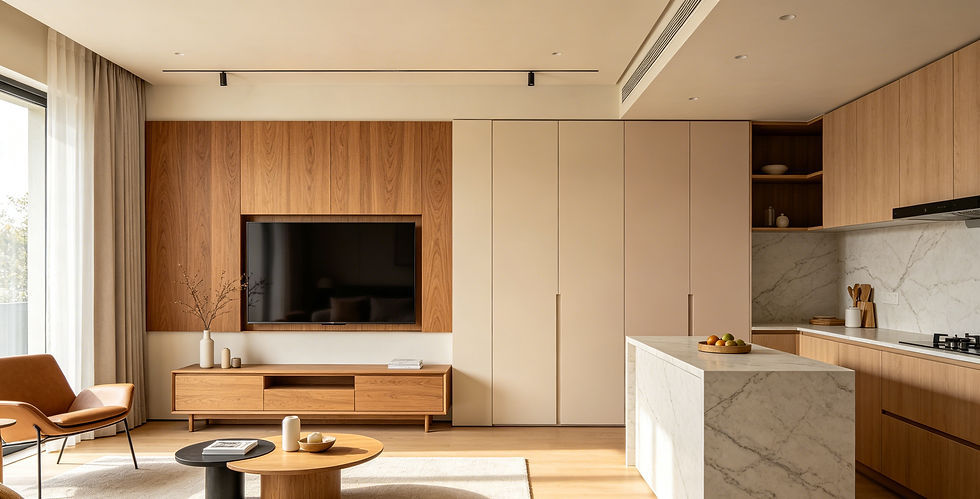
Best Budget Choice: PVC decorative film is the top pick for most home staging projects. It delivers high-end visual results at a fraction of the cost, installs quickly, and is flexible enough to adapt to different buyer preferences—perfect for MLS photo shoots and quick property turnarounds.
A Decision Framework Stagers Can Use PVC Film in 90 Seconds
1) Decide by deadline, not preference
Use this rule of thumb:
≤ 5 days to photos/showings: prioritize low-mess, low-unknown options (surface wrapping or minimal swaps like hardware).
1–3 weeks: painting can work if you can protect the finish and manage curing limitations.
4+ weeks: replacement becomes feasible—but still depends on lead times and trades availability.
Why this matters: many people confuse “dry” with “durable.” Even when latex paint is dry-to-touch in hours and recoatable in 2–4 hours, full cure can take ~14–30 days (when hardness and chemical resistance develop).That gap is where staged homes get scuffed cabinet doors, sticky drawers, and “touch-up spiral” right before showtime.
2) Inspect the surface like a pro (this prevents 80% of failures)
Before choosing film vs paint:
If the surface is structurally compromised (swollen particle board/MDF, delamination, warping): replacement is often the only honest fix.
If the surface is structurally fine but visually dated (color/finish problems): film or paint is usually smarter.
If the home is pre-1978 and you’re sanding/scraping paint: treat lead dust risk seriously—EPA’s RRP program requires lead-safe practices for many paid renovation/painting activities in pre-1978 housing. (US EPA)
3) Price the risk (not just materials)
Home staging is a “no-surprises” business. Ask:
What’s the chance we miss the photo date?
What’s the chance we need rework 24 hours before showings?
What’s the chance the finish reads uneven on camera (streaks, lap marks, sheen mismatch, patchy touch-ups)?
Concrete Upgrade Playbooks (What to Do in Real Homes)
Playbook A: Front Door “Hero Shot”

Goal: instant first impression without a construction zone.Common stager problem: Paint is cheap, but weather/humidity + cure time + smell can derail showings; replacement is slow.
Practical approach:
If the door is smooth + stable: a door wrap (architectural surface film) gives a consistent grain/solid finish quickly and avoids paint dust.
If the door has peeling paint or deep damage: patching + painting becomes multi-step and risky; replacement may be the cleanest long-term move.
Why paint is riskier on doors in a rush: even when recoat happens quickly, cure takes much longer—so the door can still dent or mark during staging traffic.
Playbook B: Kitchen Cabinets (the highest ROI photo zone)

Goal: eliminate “dated kitchen” signals fast.Typical cost/lead-time reality check (US market):
Professional cabinet painting commonly lands in the hundreds to a few thousand depending on scope (DIY can be much lower). (Angi)
Cabinet installation/replacement costs often run into multiple thousands and can scale sharply with materials and kitchen size. (Home Advisor)
Replacement lead times can be weeks even for standard lines (example: multiple major cabinet brands list estimated total lead times around ~3–7 weeks). (Cabinetworks Group)
Stager’s takeaway: if the cabinet boxes are solid and you’re optimizing for time-to-market, replacing can be the slowest and most coordination-heavy path. Painting can look great but has a “soft finish window” while curing.A lamination decorative film approach often wins when you need a uniform, factory-like look quickly—especially for doors/drawer faces where camera consistency matters most.
Playbook C: Built-ins, Panels, and “Odd Surfaces”
These are where paint often fails visually: different materials absorb differently, and sheen varies between trim/wall/panel. Surface wrap films can create a controlled finish across mixed substrates—if you follow professional QA checks:
What to ask for (so you don’t gamble):
Adhesion test language (supplier should know these): peel adhesion standards like ASTM D3330 for pressure-sensitive products, and cross-cut style adhesion checks in coating contexts like ISO 2409. (ASTM International | ASTM)
Indoor air expectations: if you’re staging health-conscious homes, ask about low-emitting options and third-party emissions programs (example: UL GREENGUARD screens products for chemical emissions and VOCs). (UL Solutions)
FAQ: The Questions That Keep Stagers Searching
1) “Why does painted cabinetry look great at first, then scuff before showings?”
Because “dry” isn’t “cured.” Latex can recoat fast, but full cure (hardness/chemical resistance) can take 14–30 days, and that’s when scuffs and marks happen.
2) “If I wrap cabinets/doors, what’s the #1 failure mode?”
Rushed prep. Most bubble/edge-lift stories trace back to oils, dust, or uneven surfaces. Film rewards clean, controlled process; paint tolerates less, but shows flaws more.
3) “Is replacement ever the best choice for staging?”
Yes—when the substrate is failing (swollen boards, warped doors) or layout is wrong. The staging risk is schedule: cabinet lead times are often measured in weeks, even for standard lines. (Cabinetworks Group)
4) “Is there a real air-quality reason to avoid painting right before showings?”
Often, yes. VOCs come from many household products including paints/varnishes, and indoor levels can be significantly higher than outdoors—ventilation and timing matter. (US EPA)
5) “What about lead paint risk?”
If you’re paid to renovate/repair/paint in pre-1978 homes and you disturb painted surfaces, EPA’s Lead RRP requirements can apply—lead dust is a real hazard in older housing. (US EPA)
6) “What proof should I request from a film supplier so I’m not guessing?”
Ask for:
adhesion/performance test references (e.g., ASTM D3330-type peel logic), (ASTM International | ASTM)
indoor emissions positioning (e.g., GREENGUARD-style low-emitting framework), (UL Solutions)
and a sample process that lets you test on your exact substrate first.
Get a “Renovated Look” Without Renovation Risk
If your staging success depends on speed + consistency + low rework, don’t choose upgrades by tradition—choose them by deadline, substrate condition, and failure risk.
If you want to spec the right lamination decorative film / architectural wrap film for doors, cabinets, or panels—and you need sample support for fast decision-making—
whatsapp:+86 15738309271


Comments